Meet the SURI Mentors
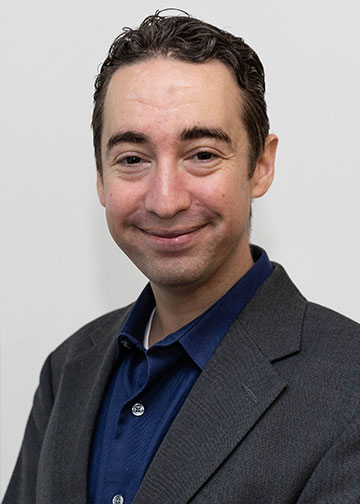
Dr. Michael Fraina- Sport Management
Exploring Experiences and Perspectives of Intercollegiate Student-Athletes on the Changing Nature of Sport Participation
The research project will involve qualitative interviews with current student-athletes about their perceptions of how the evolving nature of intercollegiate athletics has shaped their experience. Specific focus will be on name, image, and likeness (NIL), the transfer portal, revenue sharing, mental and physical health, and the overall student-athlete experience. Most student-athletes will be from Division II and III, but Division I student-athletes may be included.
Students would be involved in every step of the project. This would include collaborating on the review of literature, developing the interview guide, conducting interviews, analyzing data, and preparing for manuscript submission.
Dr. Bruno Kamdem- Business Management
Tariffs and Geopolitics: Teaching AI Agents to Play the US-Canada Rail Game
In 2025, the United States and Canada slid into a trade war, and the freight trains crossing their shared border felt the impact. In this 10-week summer project, high school and early college students model that conflict as a four-player game. The US sets tariffs, Canada sets counter-tariffs, and two railroads, CN and CPKC, set freight rates. Students first gather real public data on lumber prices, rail volumes, and tariff timelines from sources such as FRED, the Bank of Canada, and the Bureau of Transportation Statistics. Next, they learn game theory by solving simple tariff games by hand and writing down what each player gains or loses. They then train AI agents with multi-agent reinforcement learning (MADDPG) and watch strategies emerge across scenarios, from the USMCA baseline to the 2025 trade war to a hypothetical peace deal. Each student designs one experiment, tests whether the agents reach a Nash equilibrium, and states clearly where the model relies on assumptions rather than data.
Each student takes on a real research question, works with real data and code, and shares the results publicly.
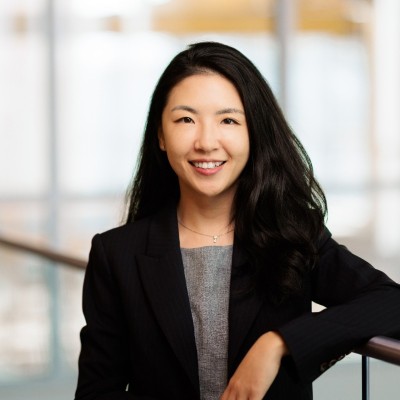
Dr. JungHyun Lee- Architecture and Construction
Can AI Read Blueprints and Get the Numbers Right? Investigating AI Accuracy and Human Verification in Estimating Materials for Building Foundations
Before a building goes up, someone has to calculate how much concrete and steel its foundation will need. This “shopping list” is called a quantity takeoff, and it starts with reading the building’s drawings (often called blueprints). Mistakes can mean construction delays, wasted money, or material shortages. Today, artificial intelligence (AI) offers the potential to make this process much faster. But can we trust the numbers?
In this project, student researchers will investigate how accurately AI can estimate concrete and steel quantities for building foundations (the structural base that supports a building) and how well people verify its results. They will first learn the fundamentals of reading construction drawings and calculating material quantities using traditional methods. They will then independently perform manual and AI-assisted estimates, compare their results, and examine discrepancies. Did AI miss a note on the drawings? Was a key detail on a different page? Were the instructions unclear? Working together, students will investigate the causes of discrepancies, revise the instructions they give AI (without ever telling it the answer), and test whether those revisions improve AI’s estimates on a brand-new set of drawings. Through hands-on experimentation, data analysis, and teamwork, students will develop technical reasoning, critical thinking, and AI literacy skills. No construction or AI background is needed. Undergraduate researchers will also have opportunities to mentor high school scholars, sharing their knowledge and guiding introductory research activities. The project aims to advance our understanding of AI’s capabilities and limitations while preparing students to critically evaluate emerging technologies in professional practice.
Dr. Jennifer Roberts- Biology
Apple and iOS Application Development for Biology Student Study
This project seeks funding to develop a dedicated Biology Learning & Engagement App for students enrolled in Biology courses at Farmingdale State College. The app will serve as an integrated digital platform that strengthens course comprehension, supports study skills, and improves retention in foundational biology, anatomy & physiology, and related coursework. The project addresses a critical need for accessible, structured, and interactive learning tools that align with modern student study habits and reduce barriers to success in STEM gateway courses.
This project will tackle multiple goals and areas of interest:
1. Increase Student Mastery of Core Biological Concepts Develop modular, curriculum‑aligned
learning units that provide clear explanations, diagrams, practice questions, and
self‑assessment tools. These modules will reinforce lecture content, reduce cognitive
overload, and help students identify gaps in understanding early.
2. Improve Study Efficiency Through Structured, Evidence‑Based Learning Tools Integrate
features such as spaced‑repetition flashcards, interactive quizzes, visual summaries,
and guided study plans. These tools will help students adopt effective study strategies
and reduce reliance on ineffective or time‑consuming methods.
3. Enhance Accessibility and Equity in Biology Education Provide 24/7 mobile access
to course materials, practice activities, and visual aids so that all students—including
commuters, working students, and those with limited study time—can engage with course
content flexibly and consistently.
4. Strengthen Student Engagement Through Interactive, App‑Based Learning Incorporate
gamified elements such as progress badges, streak tracking, and mastery indicators
to increase motivation and encourage regular practice. Engagement analytics will help
instructors identify common areas of difficulty and adjust instruction accordingly.
5. Support Instructor Efficiency and Course Alignment Create instructor tools that
allow faculty to upload custom content, track student progress trends, and align app
modules with course learning outcomes. This will streamline course preparation and
ensure consistency across sections.
6. Evaluate Impact on Student Performance and Retention Implement a data‑driven evaluation
plan measuring changes in exam performance, course pass rates, study habits, and student
satisfaction. Findings will guide future improvements and support broader adoption
across STEM departments.
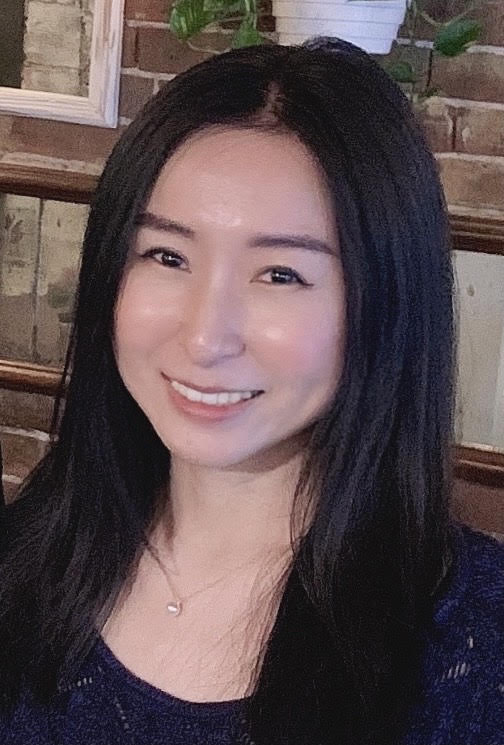
Dr. Wei Shi- Professional Communications
Sustainability Communication in the Digital Age: How Companies Portray Their Environmental and Social Responsibility
This research project will examine how companies use their websites and social media platforms to communicate their sustainability practices, environmental commitments, and social responsibility initiatives. Students will investigate how organizations construct sustainability narratives, which communication strategies they use to establish credibility, and how their messages vary across digital platforms and industries. The project will combine strategic communication theory, qualitative content analysis, and descriptive quantitative analysis. Students will collect and code corporate communication materials, identify recurring themes and patterns, and develop evidence-based conclusions about how sustainability is presented to public audiences. The central idea is to study how companies communicate sustainability, rather than simply whether they are sustainable. The project will distinguish between what companies claim, the evidence they provide to support those claims, and how they frame their environmental and social initiatives.
Through this project, the student will gain practical experience in literature review, data collection, qualitative and quantitative analysis, teamwork, critical thinking, and academic writing while developing a better understanding of how companies communicate their sustainability efforts to the public.
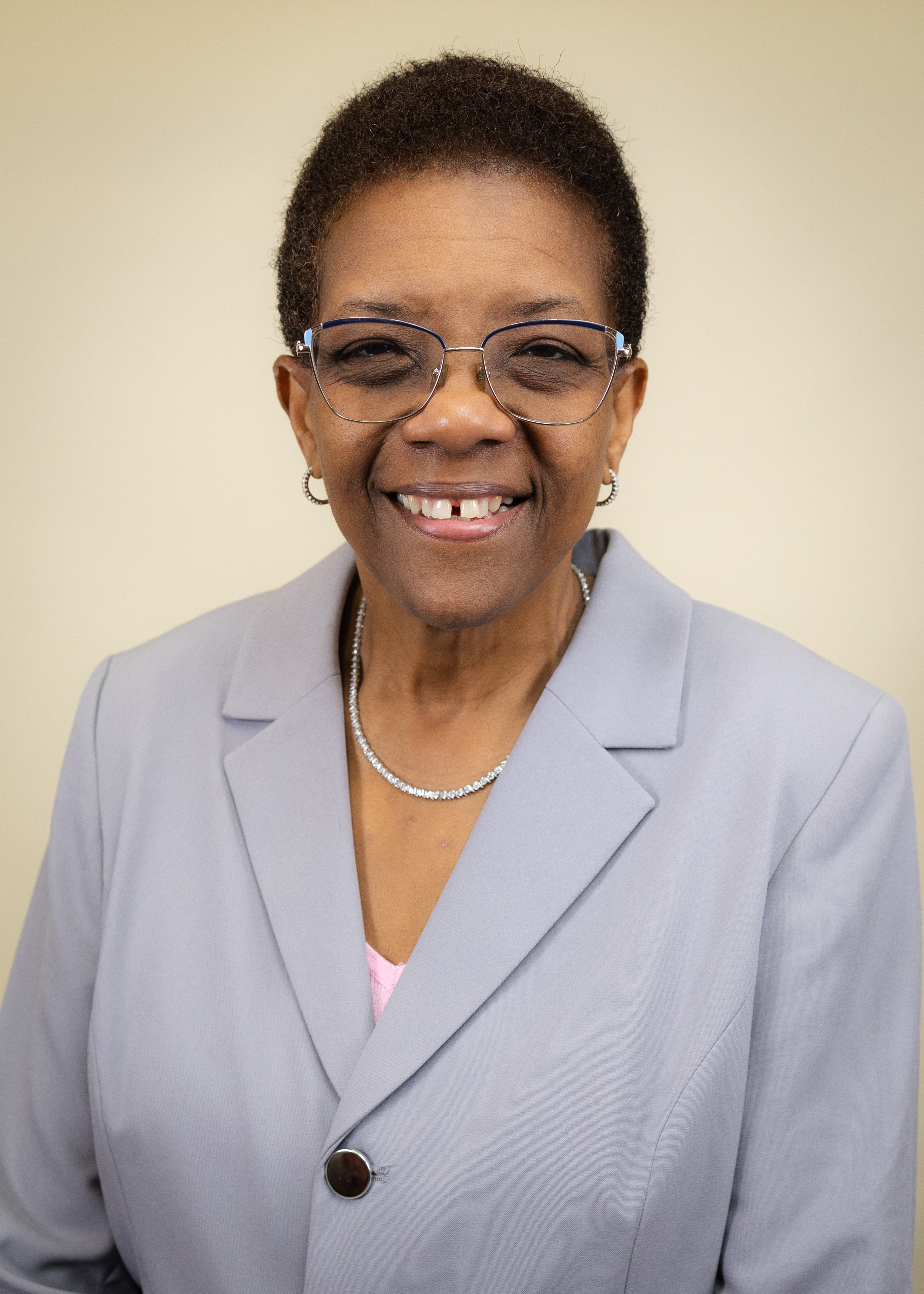
Professor Elizanne Warren-Russel- Criminal Justice
Information Gathering & Literature Review for a Study of Technology-Facilitated Domestic Violence in NY's Five Boroughs
How does information about technology-facilitated domestic violence move through the criminal justice system in New York City's five boroughs? Join a research team supporting doctoral research in Information Studies. You'll learn to search research databases, evaluate sources, and gather public documents from police, prosecutors, and the courts, then present your work at the SURI Expo.
Students on this project join a research team that supports doctoral research in Information Studies on technology-facilitated domestic violence in the five boroughs of New York: Brooklyn, Queens, Manhattan, Staten Island, and the Bronx. They work as research assistants in two areas: literature review and the gathering of public information.
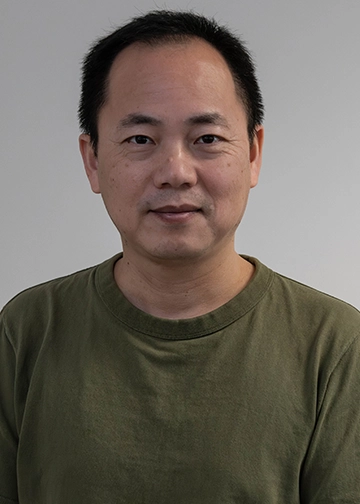
Dr. Lijian Xu- Electrical and Computer Engineering
Data-Driven Modeling and Optimization of Transportation Systems
This project will examine how mathematical modeling, computer simulation, and data analysis can be used to study transportation systems. Students will investigate problems such as traffic congestion, vehicle delays, and the effects of traffic conditions on energy consumption and emissions. Students will learn how to formulate a research question, develop a mathematical model, conduct simulations, and analyze the results. Depending on their progress and interests, they may compare different traffic conditions or control strategies and evaluate how these approaches affect system performance. The project is designed for students who are new to research. No previous research experience is required. Students will receive guidance in the relevant mathematical and computational methods while developing the ability to interpret results, evaluate assumptions, and communicate their findings. The overall goal is to produce a sound, evidence-based analysis of a transportation problem.
Students should be prepared to ask questions, test ideas, learn from mistakes, and explain their conclusions based on evidence.

Dr. Zhou Zhang- Mechanical Engineering
Teaching an AI Robot When to Act, Ask, or Stop
Would you trust a robot that always follows your instructions—even when those instructions are incomplete? If you say, “Move the blue block,” and there are two blue blocks, should the robot guess, ask a question, or refuse to move? In this project, students will investigate how an AI-assisted robot should respond when language is unclear or a requested action is not feasible. Working with a three-dimensional robot simulation built on my UR3e and Unreal Engine research, students will create tabletop challenges, test AI-generated task instructions, and develop a transparent decision layer that chooses among three responses: act, ask for clarification, or stop with an explanation. Students will compare a system that rejects unclear requests with one that asks a targeted question before checking the revised task. They will measure correct task completion, wrong-object actions, unnecessary questions, and violations of the simulation’s defined motion constraints. Their work will produce a student-designed challenge set, reproducible results, and an interactive SURI Expo demonstration in which visitors can see why the robot acted—or why it did not. The project connects robotics, AI, game-based simulation, engineering design, and responsible technology. No previous programming or robotics experience is required. Students will begin with guided examples, rotate through design and analysis roles, and develop a small investigation of their own. All required experiments will use simulation; operating a physical robot is not a condition of participation. The central challenge is not simply to make AI do more, but to find evidence for when it should do less.
Students will complete an investigation from research question to evidence-based conclusion. The core team outputs are a documented challenge set, a tested act/ask/stop decision module, an auditable results table, a reproducible analysis notebook, and an Expo poster and demonstration.
Office of Undergraduate Research & Scholarship
Greenley Library, Lower Level
934-420-5403
ours@farmingdale.edu
Monday-Friday 9:00am-5:00pm
Sarina Turbendian
Assistant Director
Gregorio Diaz Martinez
Undergraduate Research Coordinator & Advisor
Allie McGlone
Undergraduate Research Coordinator & Advisor
Daniela Figueroa
Scholarship Coordinator & Advisor