Dr. Jobeda Khanam
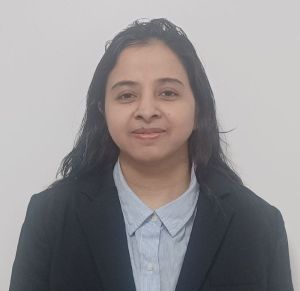
Disease Prediction Using Machine Learning
Department: Electrical & Computer Engineering Technology
This summer research project introduces students to machine learning applications in healthcare. Students will explore how different health-related features relate to disease risk. Participants will gain hands-on experience with data analysis, basic machine learning models, and research methods while developing problem-solving skills through regular faculty mentorship. The project emphasizes hands-on learning and critical thinking through practical application of engineering tools to real-world health problems and presentation of results.
Students participating in this SURI project will engage in a structured, faculty-mentored undergraduate research experience focused on data-driven disease prediction using clinical health data. Under the guidance of the faculty mentor, students will work with publicly available clinical datasets to explore how engineering and data analysis methods can be applied to healthcare problems.
Student activities will include organizing and preparing clinical data for analysis, performing data preprocessing, and examining how different health-related variables contribute to disease risk. Students will apply basic machine learning techniques to evaluate how well selected features can predict abnormal or high-risk conditions. They will also learn to assess model performance using standard evaluation metrics and to interpret results from both engineering and healthcare perspectives.
Throughout the program, students will participate in regular meetings with the faculty mentor, document their progress, and reflect on research challenges and outcomes. Students will develop skills in data analysis, critical thinking, and professional communication through written reports, presentations, and participation in SURI workshops and the culminating SURI Expo. This project will provide students with hands-on research experience while strengthening their preparation for future graduate study or careers in engineering and healthcare technology, building on the applied learning mission of Farmingdale State College.
No prior research experience is required. This project is designed for novice researchers, including first and second year college students and high school scholars.
An interest in engineering, data analysis, or healthcare applications is sufficient. Basic familiarity with computers, introductory programming, or high school–level mathematics is helpful but not required. All necessary skills and tools will be introduced through guided instruction and mentoring during the program.
Motivation, curiosity, and a willingness to learn are the primary expectations. Students will receive continuous support throughout the summer to develop the skills needed to successfully complete the project.
Students will present their research findings at the SURI Expo, the program’s culminating student research symposium. Additional outcomes may include conference poster or oral presentations (e.g., at IEEE-sponsored conferences) and the preparation of peer-reviewed conference papers or journal manuscripts under faculty mentorship. Students may also continue the research beyond the summer through independent study, senior design projects, or continued faculty-mentored research, gaining experience in technical writing, data analysis, and professional research communication.
Hybrid
Students are expected to engage in research activities for 20 or more hours per week
during the summer. This machine learning–based project will be conducted primarily
in person, with regular on-campus research work in designated laboratories within
the Electrical and Computer Engineering Technology area. There will be at least one
required weekly in-person meeting (1–1.5 hours) with the faculty mentor to discuss
progress, address challenges, and plan next steps. At the start of the program, student
availability and time preferences will be collected, and meeting schedules will be
coordinated accordingly to ensure consistent participation. Some computational tasks
may be completed remotely when appropriate, and occasional virtual meetings may be
used for brief check-ins. Overall, the research experience is designed to be predominantly
in person to support close mentorship, collaboration, and active student engagement.
RAM program
Greenley Hall, Lower Level
934-420-5403
RAMprogram@farmingdale.edu
Monday-Friday 8:30am-4:30pm