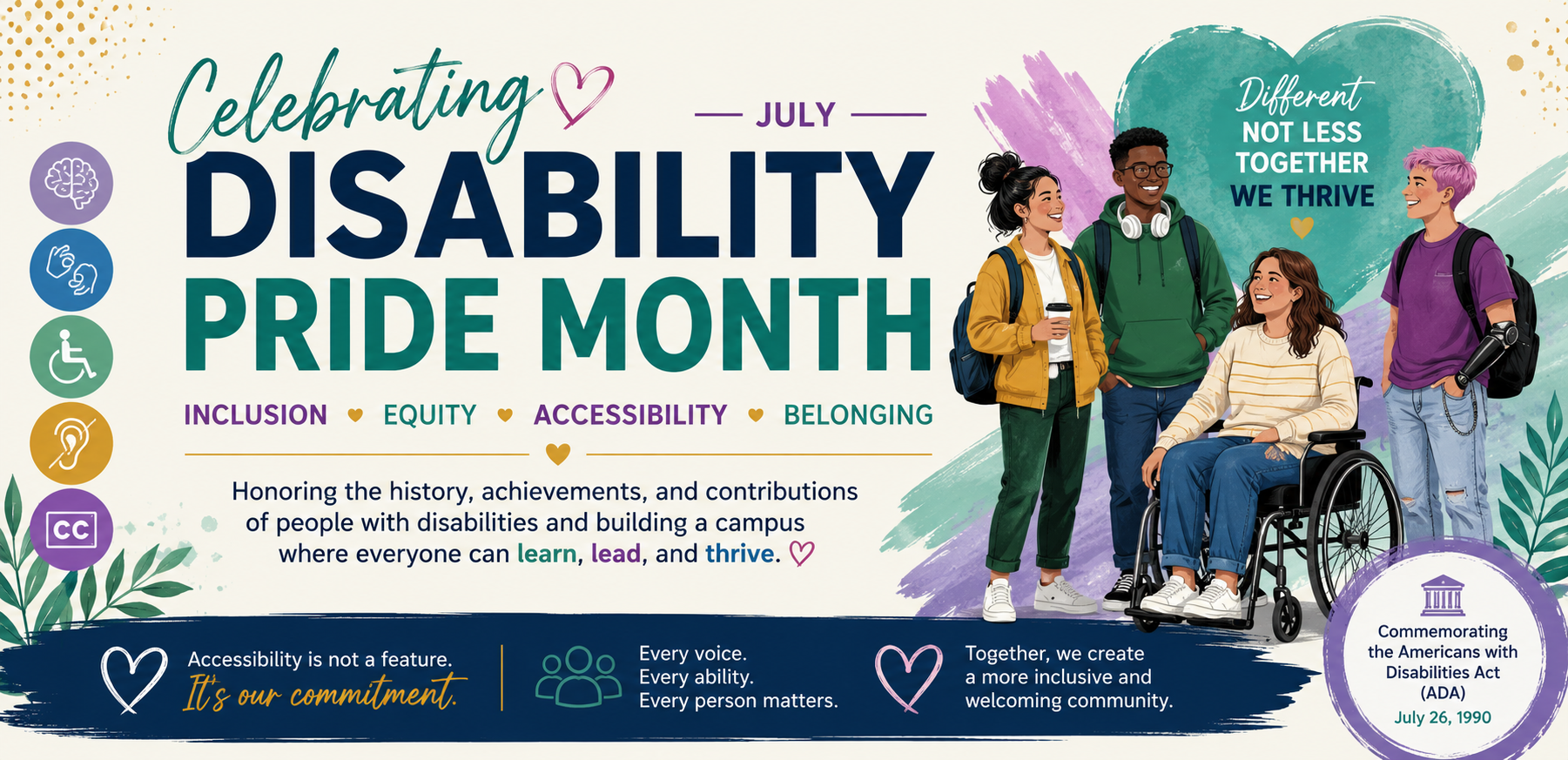
Disability Pride Month is about creating awareness and celebrating the outstanding achievements of this community. It is about recognizing that disability is a valued part of human diversity and that every member of our campus community deserves to feel seen, respected, and empowered. The 2026 theme: The World Works Better With Us, is a clear statement regarding inclusion. When people with disabilities are respected, included, and supported in schools, workplaces, healthcare, transportation, and public life, communities work better for everyone.
Did you Know Disability Pride Month is an annual observance in July that:
- Celebrates disability identity and community
- Recognizes disability culture and leadership
- Marks the ADA anniversary and the ongoing work to make civil rights real in daily life.
Why Celebrate Disability Pride Month?
- Many people with disabilities still face barriers to being fully included and valued. Ableism (discrimination or social prejudice against people with disabilities) is often ignored, however its effects are real. It limits access to education, jobs, healthcare, and respect. Disability Pride Month challenges this because Disability Pride is about being accepted on their terms, and not something to hide. Every person deserves inclusion, rights, and respect without having to earn them.
- It reinforces a basic principle: people with disabilities belong in the decisions that shape education, work, healthcare, and community life.
- The month raises awareness and advocacy for individuals with disabilities, such as a right to dignity, equal access, needed accommodations, and fair treatment. Pride is about belonging.
Inspiring Figures
- Judy Heumann: Judy (1947-2023) was an American disability rights activist whose work helped transform disability rights into a major civil rights movement in the United States and influenced policy internationally. Through decades of advocacy, litigation, public service, and organizing, she became one of the movement's most influential and recognizable leaders.
- Haben Girma: The first Deafblind graduate of Harvard Law School, Haben Girma is an internationally recognized advocate for accessible technology and inclusive leadership. She is an American disability rights lawyer, author, and public speaker known for advancing accessibility and disability inclusion. Her advocacy has influenced conversations about technology, education, and equal access in the United States and internationally.
- Ali Stroker: The first wheelchair user to win a Tony Award whose advocacy has broken barriers for disability representation in the arts. Ali is an American actress, singer, author, and disability advocate best known for her work on Broadway and television. She is widely recognized for breaking barriers in the performing arts as the first wheelchair user to appear on a Broadway stage.